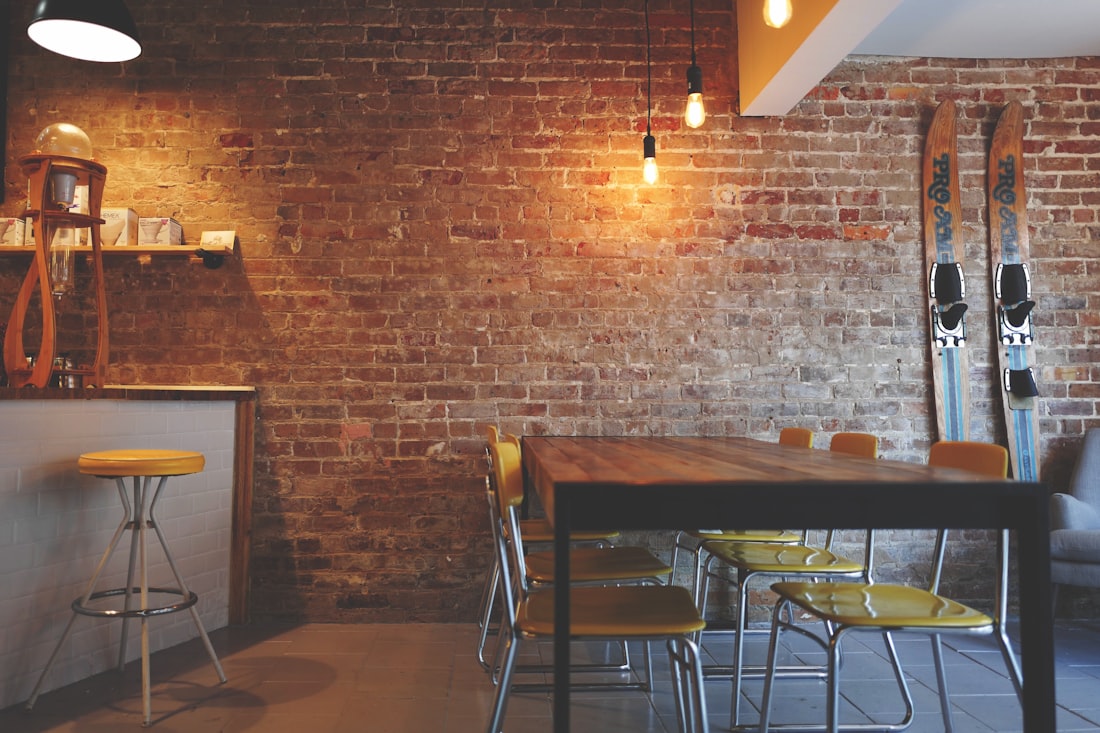
For a while I'd rather sit in a café until closing than go home. It took me a while to work out why: the cool strip light in my flat made nine in the evening look exactly like three in the afternoon at the office. That room had no "night".
Lighting is the highest-return change in a rental makeover, because it's cheap, completely reversible, and the effect is room-wide. This note starts from three basic terms and runs to a three-light setup for a room. No rewiring, no electrician — the biggest job is standing on a chair to change a bulb.
The short version
- Remember two numbers: 2700K–3000K is "home" light, and about 800 lumens equals an old 60 W bulb.
- Step one is always to swap the main bulb for warm white — a few dollars, more effect than any one piece of furniture.
- A room wants at least three light sources: a main light (which can be dim), a floor or table lamp, and one accent. At night, kill the main light and use only the low ones.
- Stick LED strips only to your own furniture, never the landlord's walls; keep the original bulb and refit it on move-out.
- Switch off at the consumer unit before touching any wiring; if unsure, pay an electrician — cheaper than the deposit.
Three terms: colour temperature, lumens, colour rendering
Read three numbers on the box before you buy a bulb and you'll never buy the wrong one:
- Colour temperature (K). Lower is yellower and warmer. 2700K is dusk light, 3000K a comfortable warm white, 4000K a neutral daylight, 6500K that office-white glare. For atmosphere choose 2700K–3000K; add one 4000K lamp where you need to concentrate.
- Lumens (lm). The total amount of light. About 800 lm equals an old 60 W incandescent; a bedroom main light wants 800–1500 lm, and a 1200 lm warm bulb is usually right for a small studio. Watts (W) now only tell you power use, not brightness.
- Colour rendering (CRI or Ra). How true colours look, out of 100. Below 80 makes your skin, food and wood furniture all look off. Pick CRI 90 or above — a few dollars more, a big jump in feel.
Step zero: tame the main light
Most rentals have a ceiling fitting with a screw bulb, or a fluorescent tube. The screw kind is thirty seconds: switch off, let it cool, unscrew the cold-white bulb, screw in a 2700K one, and put the original in a cupboard. A tube fitting is fiddlier — there are LED-tube replacements, but they involve checking the starter and wiring type, so if you don't fancy the research, just abandon the main light and use a second source instead; you won't turn it on at night anyway.
Want to change the whole fitting (an ugly ceiling light for a pendant)? That's fine too, but remember the three-part message from the first lesson: what you're changing, how you'll store the original, and that you'll put it back. And then — switch off at the consumer unit before you start. My own rule is: bulbs I'll do myself, but anything inside the junction box, I pay an electrician a small fee — that money buys safety. Rules on what a tenant may alter vary by country and state, so check your local tenancy authority if in doubt.
Three lights in a room: layers make the mood
Why is a hotel room so comfortable? Because it almost never has "one big light over the whole space". Light, taken apart, is three things:
- Ambient — the main light, basic brightness, warm white, allowed to be dim.
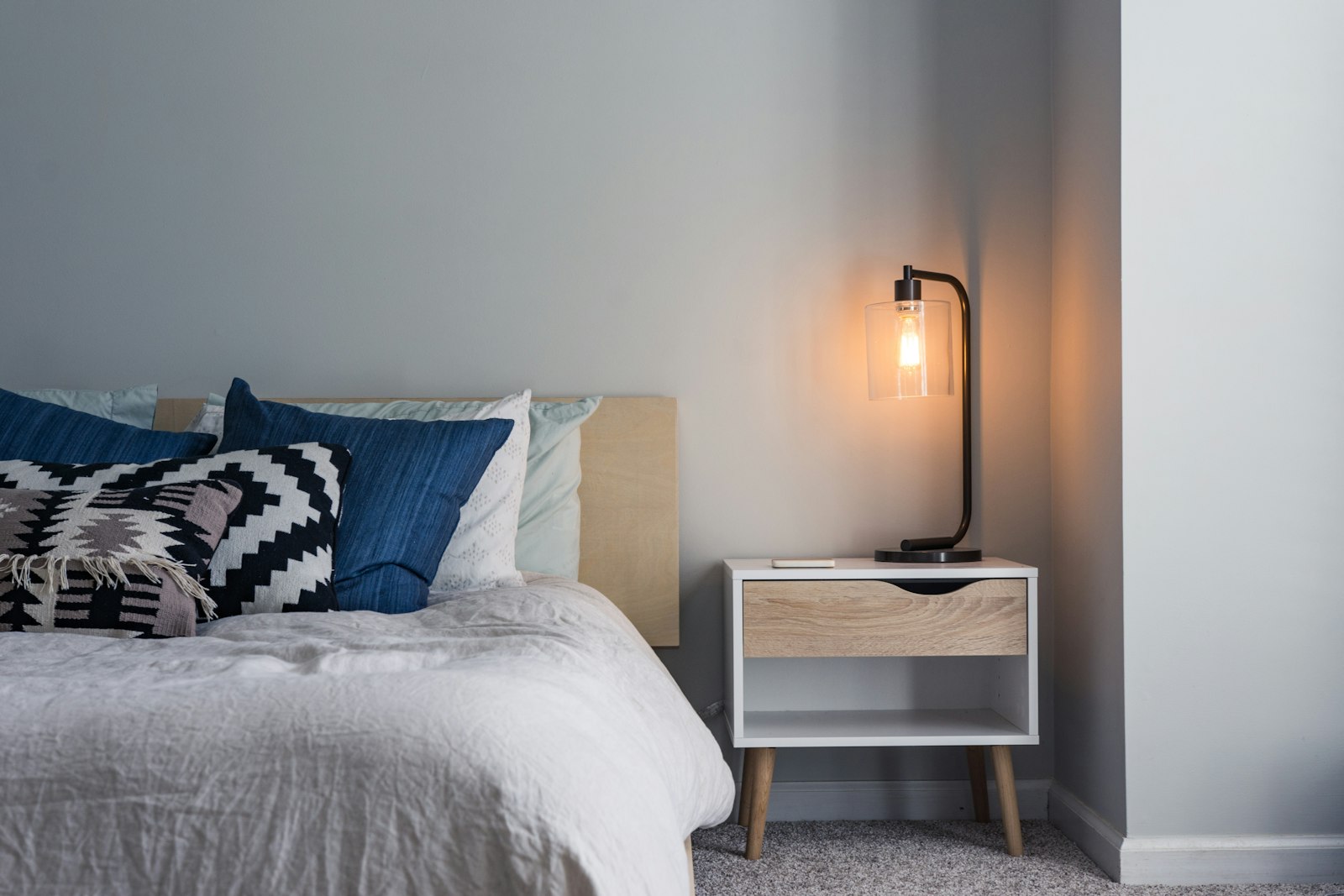
- Task — light for a specific job: a desk lamp, an under-cabinet kitchen light, a bedside reading light.
- Accent — light not for seeing by, just for looking good: a small lamp on a shelf, a spot behind a plant, a string of warm lights.
The simplest setup that works for a renter is "one main, one floor, one accent": swap the main light to warm, add a floor lamp (a shaded one is gentler than a bare bulb), and one accent. After nine in the evening, turn off the main light and leave only the other two — and you'll feel, for the first time in your rented room, a thing called evening.
Wire-free next steps
LED strips
Stuck behind a bed frame, on the back of a shelf, under the desk edge, they make indirect light that glows out from behind your furniture. The one iron rule: stick strips to your own furniture, not the landlord's walls or units. Strip backing is strong double-sided tape, not a damage-free design — straight on the wall and you're signing up for a residue cleanup. Buy plain 2700K; the colour-cycling kind gets old in three days (and photographs like an internet café).
Rechargeable magnetic and sensor lights
The best recent invention for renters: the light body sits on a magnetic base, the base goes on a damage-free mount or a small screw point, and the light lifts off to charge over USB. Bedside reading lights, a sensor light by the door, a sensor strip inside the wardrobe — all exist, a few tens of dollars (checked June 2026), zero wiring throughout.
The "fake track light"
Plenty of people want the café feel of track lighting, but track means surface cabling and screwing into the ceiling — off the table in a rental. The workaround: clip two or three clamp lamps onto a floor-to-ceiling tension pole and aim them at a wall or a picture. Seventy per cent of the look, zero deposit risk. Pole details are in the no-drill note.
Three room setups
| Scene | Setup | Rough budget (checked June 2026) |
|---|---|---|
| Small studio | Swap main bulb to 1200 lm warm + a shaded floor lamp + a string of shelf lights | ~$40–85 |
| Bedroom (with a bed head) | Main light dimmed or off + two magnetic reading lights + a wardrobe sensor light | ~$35–75 |
| Desk corner | 4000K task lamp (clamp-on to save desk space) + a 2700K strip under the desk lighting the wall | ~$30–60 |
Lighting traps to avoid
- The original light goes missing. Keep every bulb, shade and ceiling fitting you take down. "Where's the original light?" is a guaranteed question at the exit inspection, and no answer means a deduction.
- Bulb wattage over the fitting's limit. The maximum is usually printed on the socket. Hard to exceed in the LED era, but an old fitting with halogen bulbs can overheat — switching to LED fixes it.
- Daisy-chaining extension leads in a shared house. One circuit often feeds several rooms in an older building, so high-wattage appliances plus a stack of lights can trip it. All-LED lighting is basically safe, but watch a heater plus an extension lead.
- A cheap, uncertified strip-light power supply. The transformer is where strips most often go wrong; choose one with proper safety certification and don't save the last few dollars there.
Once the light's sorted, colour is the natural next step — how to put wall and fabric colours together, and how to do this year's much-loved "colour drench" without painting, is in reversible colour.
Common questions
The landlord's light fitting is ugly — can I just swap it?
Swapping a bulb or shade is generally fine; to change the whole fitting, message the landlord first, store the original, and refit it on move-out. Switch off at the consumer unit before touching wiring, and call an electrician if you're unsure.
Is warm light bad for reading?
What hurts your eyes is too little light and glare, not the colour. Use 2700K for the atmosphere zone and a bright 4000K task lamp at the desk; the two worlds coexist happily.
Will an LED strip leave residue when I peel it off?
Quite likely. So stick it only to your own furniture; if a wall run is unavoidable, lay a damage-free strip down first, stick the LED tape to that, and peel the underlayer on move-out.
Are smart bulbs worth it?
For anyone who's already lying down when they remember the light's on, yes. Adjustable colour and brightness, schedulable, and it unscrews and leaves with you — a genuinely portable upgrade. An entry-level one is plenty.
Category: Light and Colour