Every rental has a dead corner: the awkward gap by the window where no cupboard fits, the strip between the foot of the bed and the wall you can't walk through, the corner beside the wardrobe where the boxes pile up. They share a fate — they collect clutter until they're remembered on move-out day.
I'd like to speak up for those corners. They're the cheapest luxury in the whole flat. One square metre is roughly the footprint of an armchair and a lamp, but what it gives you is the only spot in the room that exists for no purpose at all — not for work, not for eating, not for sleeping. Just for sitting.
This is the smallest makeover on the site: from very little money, zero building work, no drilling, packs up whole when you move.
The short version
- Choose the spot in this order: by a window > a wall corner > the foot of the bed — and the further from desk and bed, the better.
- Three elements: a genuinely comfortable chair, a light of its own, and somewhere a book is within arm's reach.
- "Being held" is the soul of a reading nook: two sides enclosed, a small rug, one low warm light, and it's there.
- The floor version (thick cushion plus a big bolster) works completely, for very little.
- No phone in the corner — that's the one rule that keeps it alive.
The spot: 90 cm square is enough
The ideal reading-nook conditions, in order of importance: natural light (so you can read in the day without a lamp), something at your back (a wall or a unit — we feel safer with something behind us), and distance from "work" and "sleep". That last one gets overlooked most: a nook pushed against your desk becomes an extension of the desk; pushed against the bed, it becomes the chair you drape clothes on.
Measure it: an armchair plus leg room is about 90 by 90 cm, and with a small side table it still fits in a single square metre. A 17 m² studio can find the room, so yours certainly can.
Three elements: chair, light, book
A genuinely comfortable chair
"Genuinely comfortable" means you'll happily stay in it for more than half an hour. When you try one, check three things: a high enough back (up to your shoulder blades at least), a deep enough seat (your thighs supported), and armrests your elbows can rest on. Fabric beats leather for long sits; a pale colour reads lighter than a dark one. On a tight budget, the secondhand market is a treasure trove for armchairs — classic IKEA models trade heavily and often go for half price.
A lamp of your own
A reading nook needs a light that belongs to it: a floor lamp or a lamp clipped to a shelf, 2700K–3000K, bright enough to read by. Beyond lighting, its real job is to be the ritual switch — turn this on, turn the main light off, and that's the signal that says "I'm in the corner now". The detail on colour temperature and lumens is in the lighting note.
Somewhere to put a book
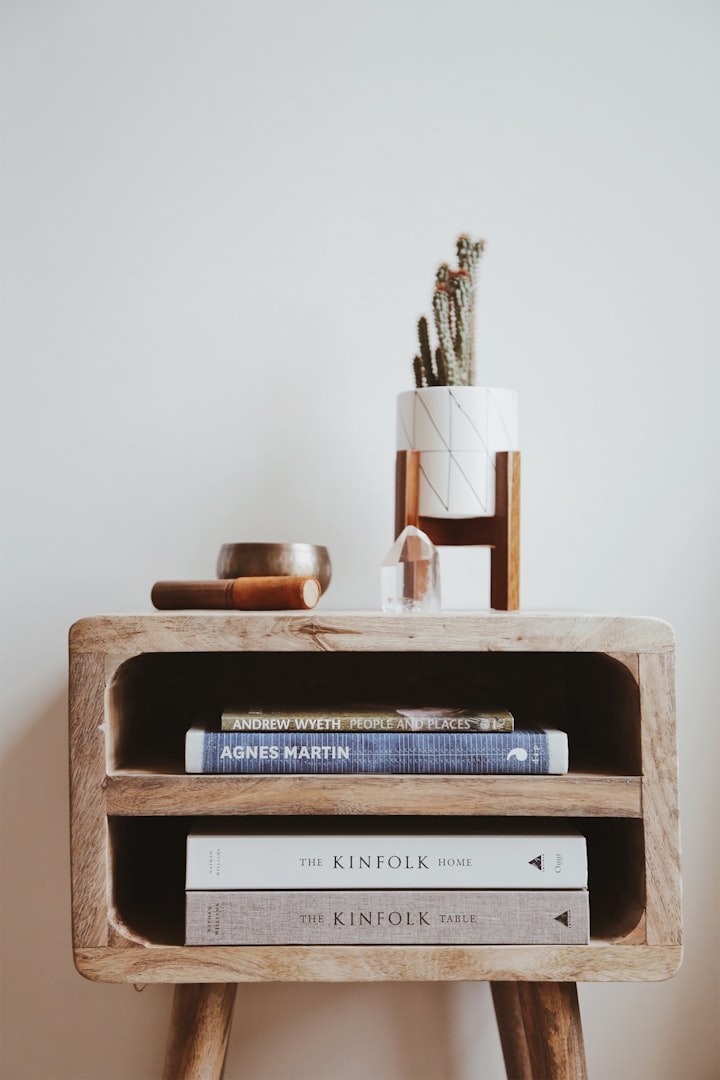
Scale it however you like: a small side table, a leaning ladder shelf, even an upended wooden crate. The only rule is "within reach" — a reading nook where you have to stand up to get a book always ends up an ornament.

Where the held-in feeling comes from
The same chair in the middle of the room is an island; in the right corner it's a nest. The difference is the sense of being held, and it has a recipe:
- Two sides enclosed. A wall behind, plus something to one side (a curtain, a bookshelf, a big plant all count) — you naturally want to curl into it.
- A small rug. A 60 × 90 mat is enough; its job is to mark out territory — the edge of the rug is the edge of the corner.
- Low light. A source below eye level softens the shadows and shrinks the world down to a square metre.
- A blanket. Draped over the chair back: across your legs in winter, a cushion in summer. The blanket on a reading nook is like the leaf on a coffee — not essential, but once you have it there's no going back.
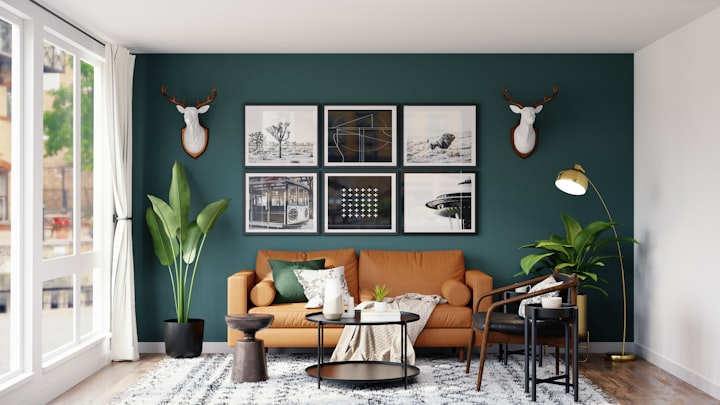
To take it further, "drench" the corner in a single colour — a deep-green hanging, an olive cushion, a moss blanket. That's a shrunk-down version of the colour drenching in the colour note, and a corner is a better place to try a dark colour than a whole room.
Three budgets
- Around $50 · the floor version. A thick floor cushion plus a big bolster against the wall, a clip lamp, a crate for a side table. Don't underrate it — add an electric throw in winter and nobody wants to leave.
- Around $170 · the standard. A secondhand armchair, a floor lamp with a fabric shade, a small side table and a 60 × 90 rug. My own reading nook is this tier, and it's lasted four years.
- Around $400 · the treat. A new high-back armchair (one you've sat in), a footstool, a good-looking floor lamp and a ladder shelf. Every piece here will follow you through ten moves; chosen by the buying rules, it's actually the best value of the three.
(Price ranges are everyday figures, checked June 2026 — convert roughly for your market.)
Keeping it alive
One harsh truth to finish on: most reading nooks end up as the most expensive clothes rack in the house. Mine has survived four years on two rules:
Rule one: no phone in the corner. Before you sit down, the phone stays charging on the desk. The corner holds only paper books, a Kindle and a drink. Run this for two weeks and you'll notice you want to go to the corner more often — because your brain has registered that square metre as "the place I won't be interrupted".
Rule two: nothing sleeps on the chair. Before bed, clear off whatever landed there in the day, so the chair is empty every morning. An empty chair is an invitation; a chair piled with clothes is a reproach.
Common questions
My room's too small — can I really spare a square metre?
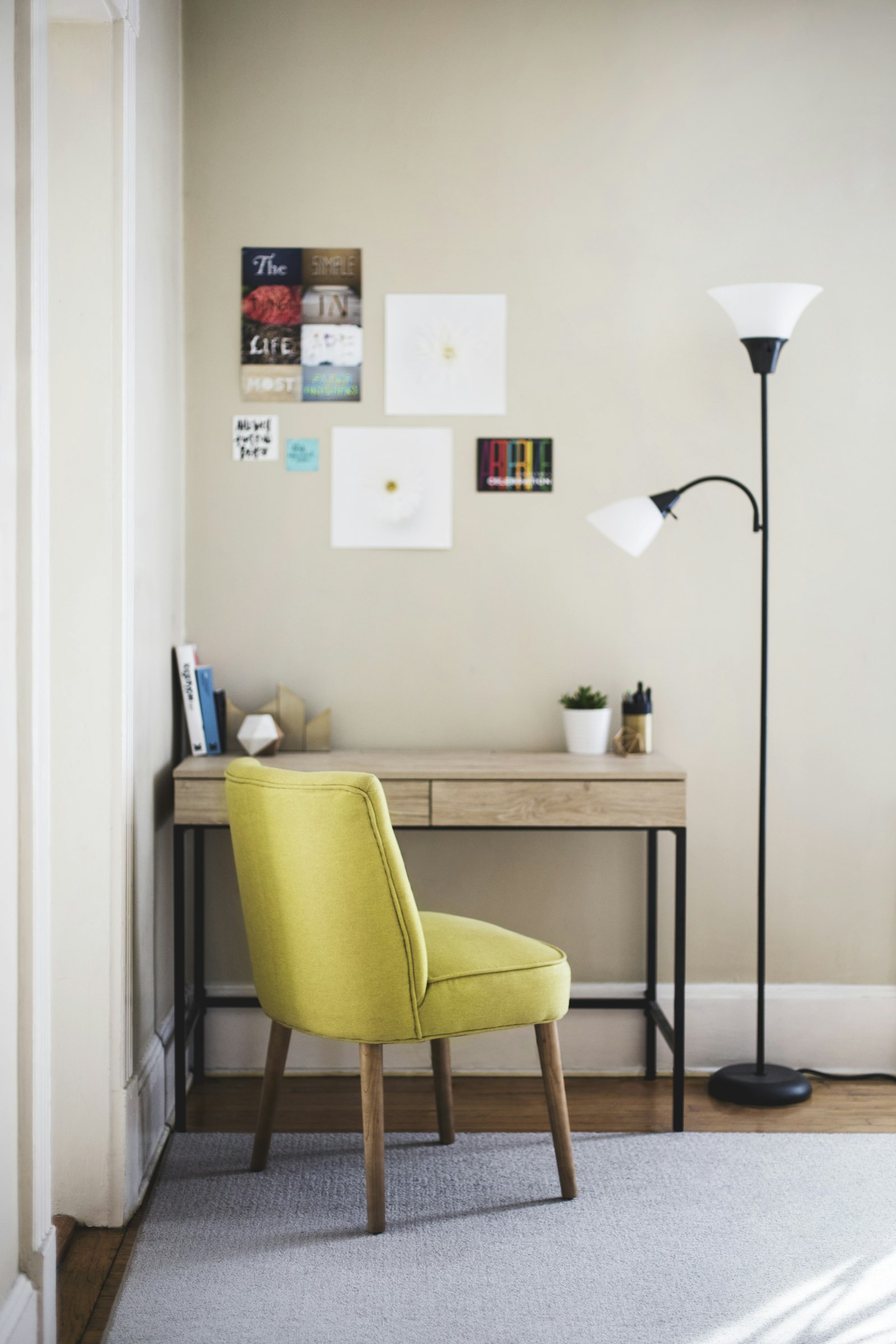
The simplest version is only 90 × 90 cm: one chair and one lamp. The gaps by a window, at the foot of the bed or beside the wardrobe usually have it already — clear the clutter and measure again.
How do I choose the lamp for a reading nook?
A light of its own, 2700K–3000K, bright enough to read by. Switch it on, switch the main light off — the change in light is the ritual of entering the corner.
What if I can't afford an armchair?
The floor version: thick cushion, big bolster against the wall, clip lamp — for very little. Plenty of people try it and stay on the floor rather than upgrade.
Category: Corners and Balcony