Rental floors tend toward two fates: the milk-tea-beige vinyl tile with a built-in whiff of 1998, and the shiny polished tile that feels like standing on the inside of a fridge in winter. What they share is that you can't pull them up — but you can, it turns out, cover them.
The beauty of "cover" is that the original floor is left untouched, so the deposit is safe, and the thing on top is yours — it leaves with you. This note covers three ways to do it, from a half-day job to a five-minute one.
The short version
- The flooring rule for renters: only cover, never glue. Any self-adhesive floor sticker is a residue disaster.
- For a whole-room upgrade, float SPC click-lock flooring — material around $15–35 per m² (checked June 2026), half a day to a day DIY.
- Less budget, want it fast: a big rug over the key zone. Size it so the front legs of the sofa sit on it and there's rug beside the bed.
- Interlocking mats are cheapest, but mind two pitfalls: rubber-backing colour transfer and dents from heavy furniture.
- Ask the landlord and keep a record before laying anything, and settle "take it or leave it" for the end up front.
Know your original floor first
Spend a minute checking the state of the original floor before you cover it, because "cover" assumes what's underneath is flat and dry:
- Vinyl tile — the commonest and the easiest to cover; the one thing to watch is lifted corners. Weigh a curled corner flat or report it to the landlord first, or you'll get a hollow sound underfoot.
- Polished or ceramic tile — the flattest surface, cover straight over. If the grout lines are deep, an acoustic underlay beneath click-lock makes it more comfortable.
- Terrazzo or stone — a classic in older blocks, and increasingly people think it looks good in its own right; consider just accenting it with a rug rather than covering the whole thing.
- Any floor already mouldy, lifting or letting water through — photograph and report it to the landlord first. This is the repair-responsibility question from the first lesson; covering it only seals the problem in and muddies whose fault it was later.
Option one: SPC click-lock, floated
SPC (stone-plastic composite) flooring is the darling of the rental scene lately, for solid reasons: the planks click-lock into each other and the whole floor "floats" on top of the original, with no glue from start to finish; it's waterproof and hard-wearing, around 4–6.5 mm thick so it barely raises the threshold; and the wood and stone looks get you most of the way to real engineered flooring.
The DIY in outline: measure your area and buy 8–10% extra for offcuts → let the planks sit indoors 48 hours to acclimatise → start along the longest straight wall, leaving an 8–10 mm expansion gap at the edges (use spacers) → angle-click each plank into the last and tap tight → score and snap around door frames with a knife → finish the edge gaps with matching trim. One small studio is an afternoon for two people, with only a knife, a rubber mallet and a tape measure.
One, stagger the joints between adjacent rows by at least 30 cm — don't let the seams line up. Two, run the planks along the light (long edge toward the window) so the grain reads cleanly as you walk in.
Reckon on $15–35 per m² for material (checked June 2026; brand and thickness vary a lot). At the end, unclick from the last row backwards, bundle it up and take it. The next place being a different size is fine — you lose the trimmed bits, the body of it carries on.
Option two: interlocking mats
Foam tiles, 30×30 or 60×60, that slot together — five minutes to cover a corner, the lowest unit cost. Good for: a very tight budget, a short tenancy, or a home with kids or pets that wants a soft floor. But two pitfalls to know first:
- Colour transfer. Some rubber or dark EVA materials, pressed onto vinyl flooring over time, "migrate" colour, and when you lift them there's a yellow or black stain on the floor that won't wash out — that's the deposit risk. The fix: choose a type labelled "non-staining / no transfer", or test one tile under the bed for a couple of weeks first.
- Dents and a cheap look. Heavy furniture leaves permanent dents in foam; glossy cartoon-coloured tiles downgrade a room on sight. Choose matte, larger, wood- or linen-look tiles and they pass visually.
Option three: the big-rug strategy
Don't cover the whole room — cover just "the bit you spend most time on". It's the best value of the three. With a rug, everything rides on size — buying it too small is the classic beginner's mistake:
- Sofa / armchair zone: the front legs of the furniture should sit on the rug, and the rug should run 15–20 cm wider than the furniture group on each side.
- Bed zone: lay the rug under the lower half of the bed, with 50–60 cm showing each side, so your first step out of bed lands on rug, not cold tile.
- Desk zone: the chair should still be on the rug when pushed all the way back, or the wheels catching the edge will annoy you eight times a day.
On material, short-pile or flatweave is easy to clean and doesn't catch chair wheels; long-pile is cosier but at war with a robot vacuum. Put a non-slip pad under any rug — a few dollars, stops it sliding and protects the original floor. Vacuum it weekly, and air it occasionally in the damp season so moisture doesn't build up underneath.
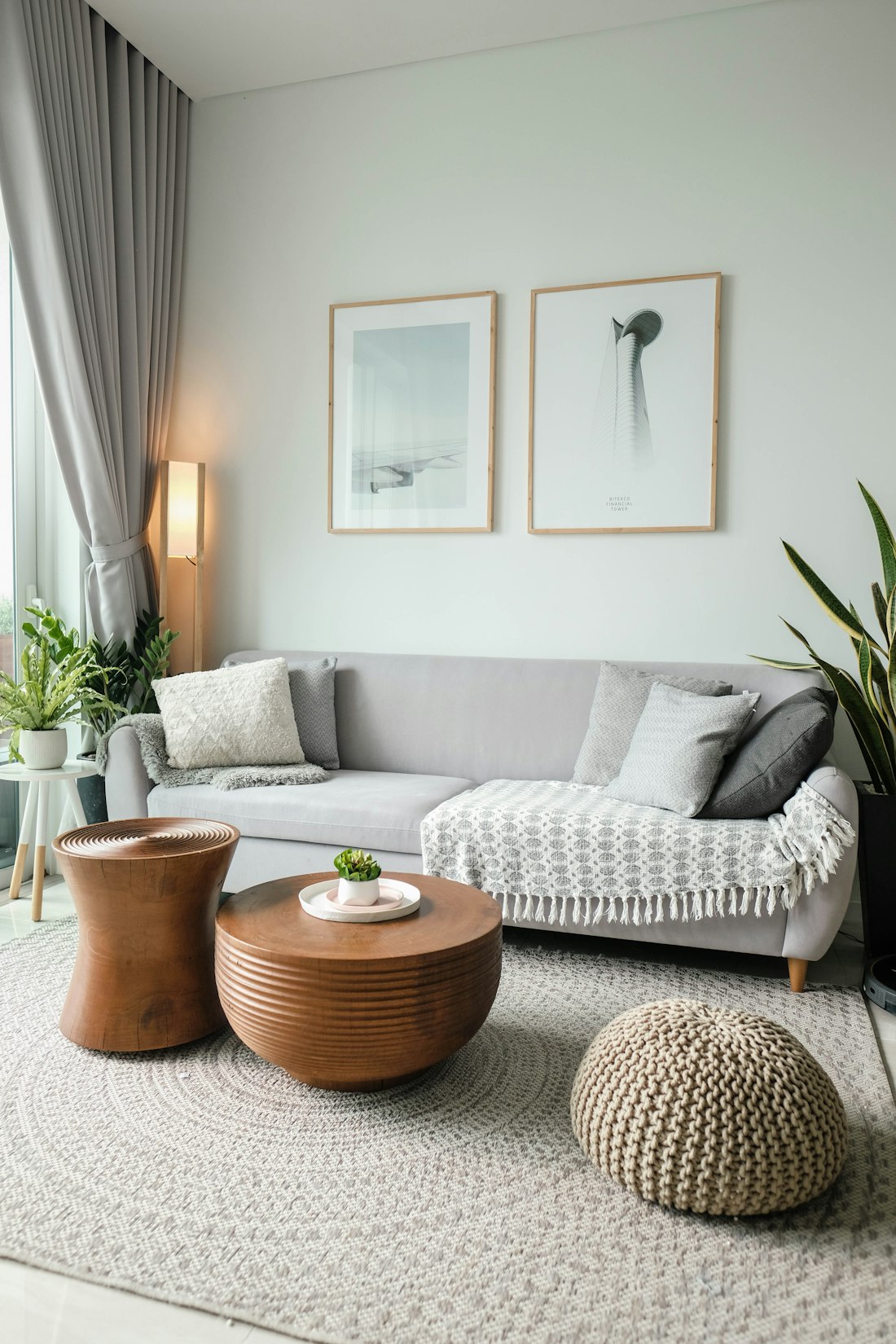
Three options compared
| Option | Rough cost | Time to lay | Upgrade | Portability |
|---|---|---|---|---|
| SPC click-lock, floated | $15–35 per m² | Half a day to a day | Whole-room new face | Lifts out, some trim loss |
| Interlocking mats | From a few dollars per m² | Minutes | Function over looks | Fully portable |
| Big rug | $30–300 each | Instant | Key zone + zoning effect | Roll it up and go |
My honest steer: under a year's tenancy, just use a rug; two years or more, and if that beige floor genuinely bothers you, then lay click-lock — it's the "better value the longer you stay" investment.
Flooring traps to avoid
- Self-adhesive floor stickers. Once more: the residue and peeling on removal are the number-one flooring deposit dispute. The cheap price waits two years to collect.
- Forgetting the expansion gap. Click-lock expands and contracts; no gap at the edges and it buckles into a little mountain range in summer.
- Covering a problem floor. Water ingress, pests, lifting — report it, don't cover it. Covering it is putting a blanket over the building's illness.
- The door won't open. Measure the gap under the door before you lay; 4–6.5 mm of plank plus underlay can just catch an inward-opening door. Test-lay one plank at the doorway before you order.
- Laying in a damp spell. In a humid season the planks take on moisture and then shrink as they dry, opening the seams. Lay in a drier stretch, or extend the acclimatisation to 72 hours (how to manage humidity at home is in the damp handbook).
Common questions
Do I have to take click-lock up when I leave?
In principle you return to original, but many landlords see the upgrade and want it left. Ask a month before moving out — if they want it kept, agree terms; if not, half a day to lift it and take it to the next place.
Should I ask the landlord before laying click-lock?
Yes, and keep a record. Make three points: no glue, no harm to the original floor, take-it-or-leave-it at the end is their call. Put that way, it's very rarely refused.
Can I lay it in the bathroom or kitchen?
SPC is waterproof, but not the bathroom: raising the floor changes the drainage fall, and pooling water is ten times worse than an ugly floor. A dry kitchen area is fine — trim it at the threshold.
Are those self-adhesive vinyl floor stickers ever OK?
In your own home, sure; in a rental, no. That glue hardens quietly where you can't see it, and settles up with you on the day you leave.
Category: Layout, Flow and Deposits