For years I was the person who could kill anything green. In my first three flats I sent seven or eight plants to an early grave — succulents rotting in wet soil, herbs yellowing quietly in a dark corner, a beautiful leafy thing from the garden centre reduced to bare stems inside a month. For a while I genuinely believed I wasn't allowed to keep living things alive.
What I eventually worked out is that the problem was never a missing green thumb. I'd been choosing the wrong plants and looking after them the wrong way. A rental's light is poor to begin with, so forcing sun-lovers to survive in it was always going to end in a graveyard. This note is the lazy list I put together after I finally crossed over from plant-killer to "there's actually some green on the balcony": how to pick things that won't die, how to water without drowning them, and how to keep the whole setup from costing you your deposit.
The short version
- Be honest about your light first: most rentals sit somewhere between bright indirect and low light, so choose plants for that, not for a sunny magazine flat.
- The number-one plant killer is overwatering, not neglect — keep them on the dry side and only water when the soil has actually dried out.
- Start with six species that are genuinely hard to kill: snake plant, pothos, Chinese evergreen, philodendron, monstera and syngonium.
- Put a drip tray under every pot, tip out the water that collects, and never let a pot sit pressed against the landlord's floor or windowsill.
- Plants themselves are a low deposit risk. What you're really guarding against is water marks and mould — not the greenery.
Step one: be honest about your light
Before you go anywhere near a garden centre, do the least exciting but most important thing: stand where you want the plant to live and watch the light there across a whole day. Rental light falls into roughly four bands:
- Direct sun. A few hours of sun landing straight on the spot, usually a south- or west-facing window. Having a spot like this in a rental is a luxury.
- Bright indirect. You can see plenty of sky but the sun doesn't hit the plant directly — an east-facing or shaded window. This is what most easy-care foliage loves best.
- Low light / part shade. A metre or two back from the window, dim but bright enough that you don't switch a lamp on by day. Snake plants and pothos are perfectly happy here.
- Dark. A corner, hallway or windowless space where you need a light on in the daytime. Don't force a living plant here — think a grow light, or just dried stems instead.
Most studios and shared rooms land somewhere between bright indirect and low light. Once you accept that, you'll stop buying the sun-hungry herbs and succulents that were never going to make it — they didn't die because you're hopeless, they were sentenced by your windows. And bright indirect or low light still means light: even the toughest species needs a window somewhere in the room. Low light doesn't mean no light. If you're not sure which band your spot falls into, the quick test is whether you can comfortably read a book there at midday without switching on a lamp — if you can, it's at least low light, and most of the six species below will cope.
The four ways renters kill plants
Before we get to what to buy, let's cover how to stop killing them. I've fallen into all four of these, and they're the classic beginner traps:
- Overwatering (the big one). Watering while the soil's still wet, misting every day out of guilt, and the roots sit in water and rot. Rotten roots make the leaves go yellow and soft — which looks exactly like thirst, so you water more, and round it goes. It's the most common death spiral there is.
- The wrong light. Putting a sun-lover in a dark corner, or a shade plant in a baking west window where it scorches — both are the wrong spot. Read the light first, then choose the plant.
- No drainage hole. A lot of pretty decorative pots have no hole, so water pools in the bottom and the roots stew. Either drop a plastic nursery pot with holes inside the nice one, or drill a hole yourself.
- Repotting the day it comes home. A plant that's just changed homes is already adjusting; disturb its roots on top of that and you've kicked it while it's down. Leave it in its original pot for two or three weeks to settle before you do anything.
A counterintuitive truth: most indoor plants die from drowning, not thirst. When you're not sure whether to water, the answer is usually "not yet". A plant can nearly always bounce back from one missed watering; root rot often can't be undone.
Six plants that are genuinely hard to kill
These six are the classic beginner-friendly crew: shade-tolerant, drought-tolerant and very forgiving of the occasional forgotten week. I've listed them roughly from bombproof to needs-a-little-attention:
| Plant | Light | Watering (rough guide) |
|---|---|---|
| Snake plant (Sansevieria) | Low light to bright; extremely shade-tolerant | Every 2–3 weeks; let the soil dry right out |
| Pothos | Bright indirect to low light | When the surface is dry; happy in water too |
| Chinese evergreen (Aglaonema) | Shade-tolerant; dislikes strong direct sun | Water when dry; very forgiving |
| Philodendron | Bright indirect | When the topsoil dries; doesn't mind humidity |
| Monstera | Bright indirect; no direct scorching | When the top inch or two is dry |
| Syngonium | Even more shade-tolerant than monstera | Likes humidity but water when the top is dry |
If you can only take one home, make it the snake plant: it's the closest thing to a "leave it alone and it lives" houseplant — shade-tolerant, drought-tolerant, watered once every couple of weeks, and ideal for a renter who's busy or often away. Once you want the jungle look, work up to a monstera or a philodendron. As for watering frequency, treat the numbers in the table as a starting point only — the thing that actually matters is the single rule in the next section. And you don't have to buy them full-size — a small pot is cheaper, settles into your light faster and grows into the space, so you get to know the plant before you commit to a big one.
The one rule for watering
Forget "water every N days" — the same plant needs wildly different amounts in summer versus winter, or in a stuffy room versus an airy one. There's only one thing worth memorising: push a finger about 5 cm (a couple of inches) into the soil; if it's dry, water; if it's still damp, wait.
When you do water, water thoroughly — until it runs out of the drainage hole, which tells you the whole root ball has had a drink — then tip out whatever collects in the drip tray so the pot isn't left standing in water. That one habit sidesteps the number-one killer. In winter, when it's cold and growth slows right down, water even less often. Rainwater or filtered water is a little kinder than hard tap water over the long run, but for these tough species plain tap water is completely fine — don't overthink it. Keep the old line in mind: when in doubt, keep it dry.
Quick trick: buy a cheap moisture meter (a few dollars, checked July 2026) and push it into the soil. Until you've built up a feel for it, it'll tell you whether the soil is actually dry far better than anxiously poking at it every day.
Pots and placement: protecting the deposit too
Plants themselves almost never cost you the deposit. Water does. So with a rental, the whole game with pots and placement is about stopping water marks:
- A drip tray under every pot. This is your first line of defence for the landlord's floor, windowsill and cabinet tops, and the thing that stops leaks. If the decorative pot has no hole, slot a holed nursery pot inside it.
- Don't leave a pot pressed against a wall or window frame. Leave a small gap for air; a pot sitting damp against a surface leaves mould spots on the wall or frame, which is exactly the grey area of "whose job is this to clean".
- Want to hang a pot? Go no-drill. Hang a trailing pot from a tension pole, or use a waterproof damage-free hook stuck to your own shelf or the tile — same principle as the no-drill note — rather than drilling a hole in the wall for one pothos.
- Stand big plants on a waterproof tray or a wheeled caddy. A monstera gets large; a caddy underneath handles watering, moving and floor protection in one go.
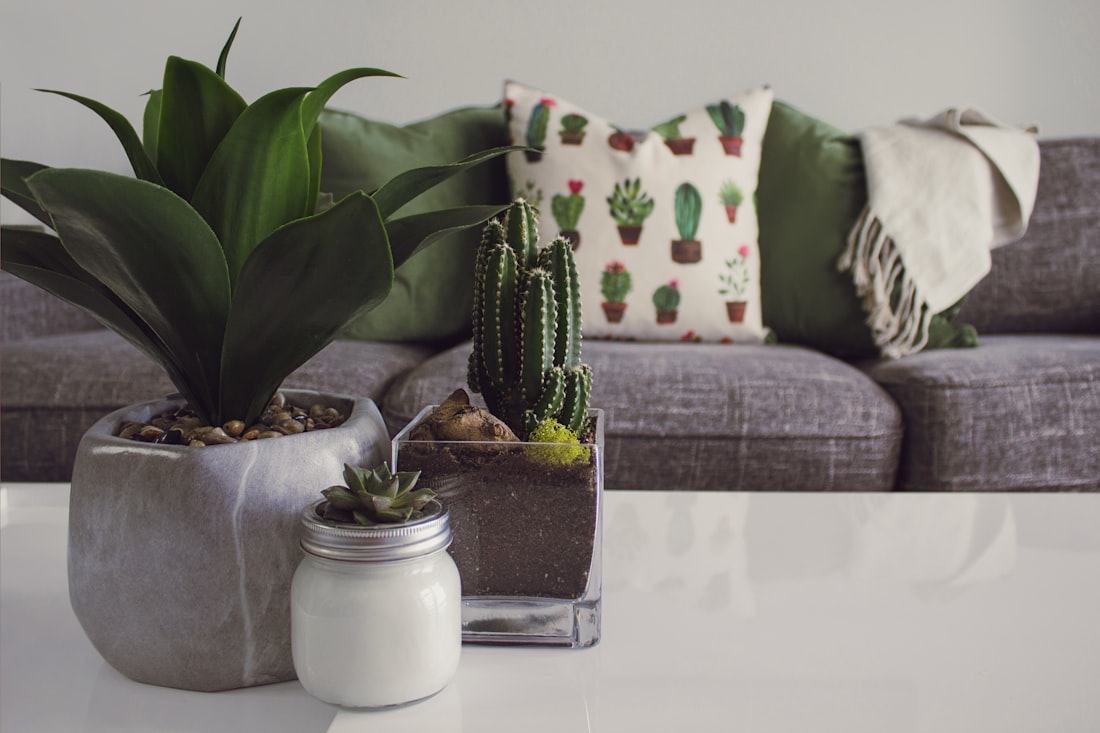
Do that and your plant corner only ever adds to the room — it never chips away at the deposit. Greenery is the cheapest, most instant mood-changer in the whole rental-makeover kit; it lands harder than a lot of furniture. To carry on turning a corner into the spot you actually want to sit in, read on to a one-square-metre reading nook.
Common questions
Can I keep a plant in a room with no window?
If it's genuinely dark — an internal bathroom, a windowless dressing room — don't force a living plant on it. Even the most shade-tolerant species still needs light to photosynthesise; they just need different amounts. If the room has a window, though, even one the direct sun never reaches, a snake plant, pothos or Chinese evergreen will get by. If you really want greenery in a dark spot, add a grow light, or simply switch to dried flowers or a pressed-leaf frame rather than fighting the plant's biology.
Why do my plants always die?
For renters, the number-one cause of death is almost always overwatering, not under. You water while the soil's still wet, the roots sit in water and rot, the leaves go yellow and soft in a way that looks like thirst, so you water even more — a vicious circle. Second place is the wrong light: a sun-loving succulent parked in a dark corner. Fix those two and your survival rate roughly doubles. The rule never changes: keep it on the dry side, and match the plant to the light.
Will keeping plants attract bugs or put my deposit at risk?
The plants themselves are almost no risk to your deposit; what to watch is water and damp. A pot with no drip tray, water leaking onto the landlord's wood floor or windowsill and, over time, leaving a stain or even mould — that's what gets money taken. So put a tray under every pot, tip out the standing water after watering, and don't let a pot sit permanently damp against a wall or window frame, and the risk stays tiny. The occasional cloud of fungus gnats is nearly always a sign of soil that's too wet; let it dry right out and it clears up.
Category: Corners and Balcony